Red & sweet goodness

Red & sweet goodness
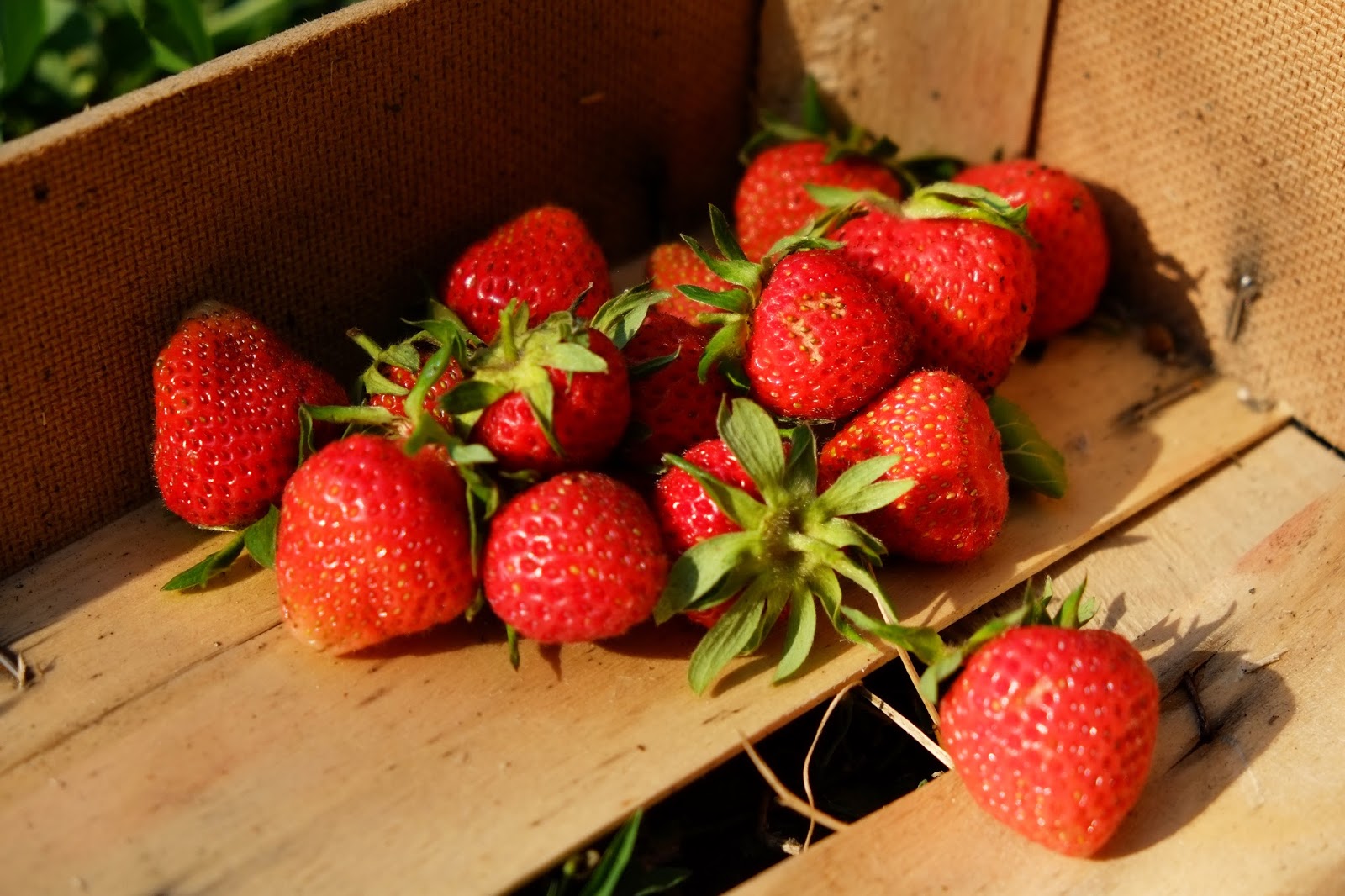
Fresh, handpicked strawberries

Wednesday, August 3, 2016

Nature for all senses

Hello all!

Wow. It’s been a half a year since my last post! But it's no surprise - the rest of my last semester at Berkeley was very hectic and I worked hard to finish strong, which meant that I had no time for anything extra. It paid off, since I graduated in May with a Bachelor’s Degree in Nutritional Sciences, Dietetics. Up next is my dietetic internship at UCSF Medical Center, which I just started a few days ago. It’s going to be a crazy, but a rewarding year.

View from the lake shore toward the lake

Before starting the internship, I had a chance to enjoy a break in my first home, Finland. Even though nutrition is my main emphasis when it comes to promoting well-being, I noticed very tangibly this time how much being in nature can induce happiness. The first thing that I noticed when I arrived in Finland this year, were the amazing smells. Forest and wild flowers are everywhere and they produce such amazing aromas! Additionally, multiple times I woke up to the singing of birds, which is one of the best ways to wake up in the morning in my opinion. The hum of traffic is also almost nonexistent there, which is very nice since it is almost impossible to escape it in the heart of Silicon Valley.

Nature can offer stimulation not only for hearing and smell, but also for sight and touch. For example, one day I decided to take a walk to a nearby lake shore. The lake shore offered breathtaking views of the lake, and sitting on the solid rock, which is very common on most shores here, warmed up by the sun’s rays, felt amazing, too. At that moment nature engaged all of my senses, as the needle trees also smelled wonderful, and the birds singing and waves rippling against the rock provided a lovely soundtrack. It was easy to feel happy and at ease!

Bedrock and needle trees at the lake shore
Even though I do really enjoy living in the San Francisco Bay Area, I sometimes miss the closeness of nature that is available in Finland. Of course, nature is not too far away here either, since one can drive to the mountains and enjoy a hike there as well, but it is not quite the same as having to walk only 30 seconds from your front door to be in the forest. In Finland, Everyman’s Rights guarantee that anyone can walk almost anywhere in nature, as long as he or she doesn’t cause harm to it, or go too close to buildings. In California, one always has to stay on the path and roaming freely is not possible. Still, at the end, it comes down to what a person is used to – I am used to having the forest right there all the time, whereas having a city park nearby is all that some may need.

My first Biology teacher at my community college told the class once that nature is good for one’s health, seen in the drop in their blood pressure. I also – through personal experience – think that being in nature can promote one’s well-being instantly. Similarly, in a study conducted in Stanford, the researchers found that spending time in nature decreases the risk of depression (1). I’d like to see even more scientific research studies done on the subject, as we can both improve people’s health, and increase the general desire to protect nature, when we tangibly understand what healthy nature can offer us (2).

Even though I can’t just walk into the forest from my front door in California, I can still find beautiful nature close-by. I just need to expend a little more energy to get there, which, once I get there, really doesn’t even feel like effort at all! The nature in California is different, but equally good. I encourage everyone to go for a hike at the next chance and invite me to go along!

Tilden Regional Park

  Thanks for reading,

  Anna-Kaisa


References
1)     http://news.stanford.edu/2015/06/30/hiking-mental-health-063015/

2)     https://www.psychologytoday.com/blog/the-moment-youth/201403/does-nature-make-us-happy

Friday, February 5, 2016

Playing with Food

Testing four kinds of apples: Mushu,
Sonata, Golden Delicious and
Jonagold
Empowered by a food science class that I took last semester, I decided to start experimenting on making desserts healthier. I love dessert, but haven’t been too happy with how devoid of nutrients most desserts are. Therefore, I wanted to start making my favorite desserts healthier while still keeping them delicious.

As my first project, I chose a dessert that I used to make all the time in Finland during the fall season: apple crisp. I had made it here in California before, but felt that something seemed different about it. In addition to making it healthier, this would be my chance to make it right, too. To help me make a decision on the right recipe, I had friends and family tasting different versions of the crisp and filling out score cards to grade them.

My friend Weiwei is filling a
descriptive testing score card
on three versions of the crisp
My first step was to find an apple variety that would taste great when baked. I tried many apples and by far the most flavorful one ended up being Jonagold. A close second was Granny Smith, which works well in this recipe, too. The first time I tried Jonagold apples, I realized the reason why my previous takes on the apple crisp had felt so wrong - I had used apples that are almost flavorless when baked. The complexity of the flavor of Jonagold apples made everything fall into place!

Next, I tried many combinations of fat and sweetener for the crisp. My favorite combination ended up being butter and agave syrup. (You might wonder how these are healthy, but they are less processed than vegetable shortening and white sugar, and as agave is mostly fructose, you might need less of it, too.) I noticed that ghee and virgin coconut oil could do the job, too, as well as maple syrup as a sweetener, although the crisp would then be slightly less sweet. The beauty of this recipe is that you can change the amounts of ingredients quite freely. The only thing to keep in mind is that the fat is supposed to “wet” the oats thoroughly.

Lastly, I looked for a recipe that would take the place of a Scandinavian instant vanilla sauce as a topping for the crisp. I did some substituting and found that a recipe using eggs and potato starch as a thickener worked pretty well. 

The final recipe? A flavorful mixture of apple and cinnamon, topped with vanilla goodness.


Funnish Apple Crisp (Omenapaistos)

2 Jonagold apples
2/3 stick Kerry Gold reduced fat butter
3 tbsp agave syrup
1.5 cups rolled oats (quick and baby rolled oats will also work)
Cinnamon to taste

Peel and slice apples, put into a baking dish that will accommodate the apples in a one to two-inch layer. Sprinkle with cinnamon and mix. Melt the butter and mix with the oats and maple syrup. Spread evenly on top of the apples and sprinkle with cinnamon. Bake at 400F for 40 mins, or when apples become thoroughly soft. Serve with vanilla sauce.

Vanilla sauce (adapted from this Finnish recipe)
1 2/3 cup cold whole milk
1 egg
1 tbsp potato starch
3 tbsp agave syrup
1 tbsp vanilla extract

Mix the cold milk with the egg and the starch in a sauce pan suitable for heating milk. Make sure to break the egg completely. Heat the mixture while mixing continuously until it thickens and just starts to bubble. Put the sauce pan in cold water and add the agave syrup. Mix the sauce every now and then until you can touch the pan with your hand without burning. Add vanilla extract.
Note – this sauce will break down if you double dip your spoon in it. It also has a tendency to gel over time, so eat it soon after preparing.

Let me know what you think if you decide to try out my recipes! I'm sure there is always room for improvement.

Love,

Anna-Kaisa


Thursday, January 14, 2016

Eating while traveling - not a problem!

Inspired by my trip over the New Year’s vacation, I wanted to share with you my thoughts about eating healthy while on the road. It’s pretty easy to eat healthy at home when you have a fridge, an oven, a blender and such to help you, but you might not have any of that stuff when traveling. It is important for me to eat well even during trips and I’ve found that with a little bit of thought and preparation, you can do pretty well to prevent weight gain and stay properly nourished!

1.       On the road. Plan ahead: it might be close to impossible to find food that is not a candy bar or chips at gas station mini markets. Fast food is also much more readily available than anything else, but it really is not the food to eat, unless it is an emergency. Airports are beginning to have juice bars etc., which are a great option if your wallet allows it. With air travel, when it comes to fresh food, fruit, like cuties or bananas are easy to take with and also easy to eat, requiring no extra tools. Carrots are also convenient. Other than that, nuts, granola bars and dried fruit are useful to have around as well. My favorite thing to bring along was mashed fruit baby food, but with the no-liquid policy, I can’t have them anymore. Bummer. 
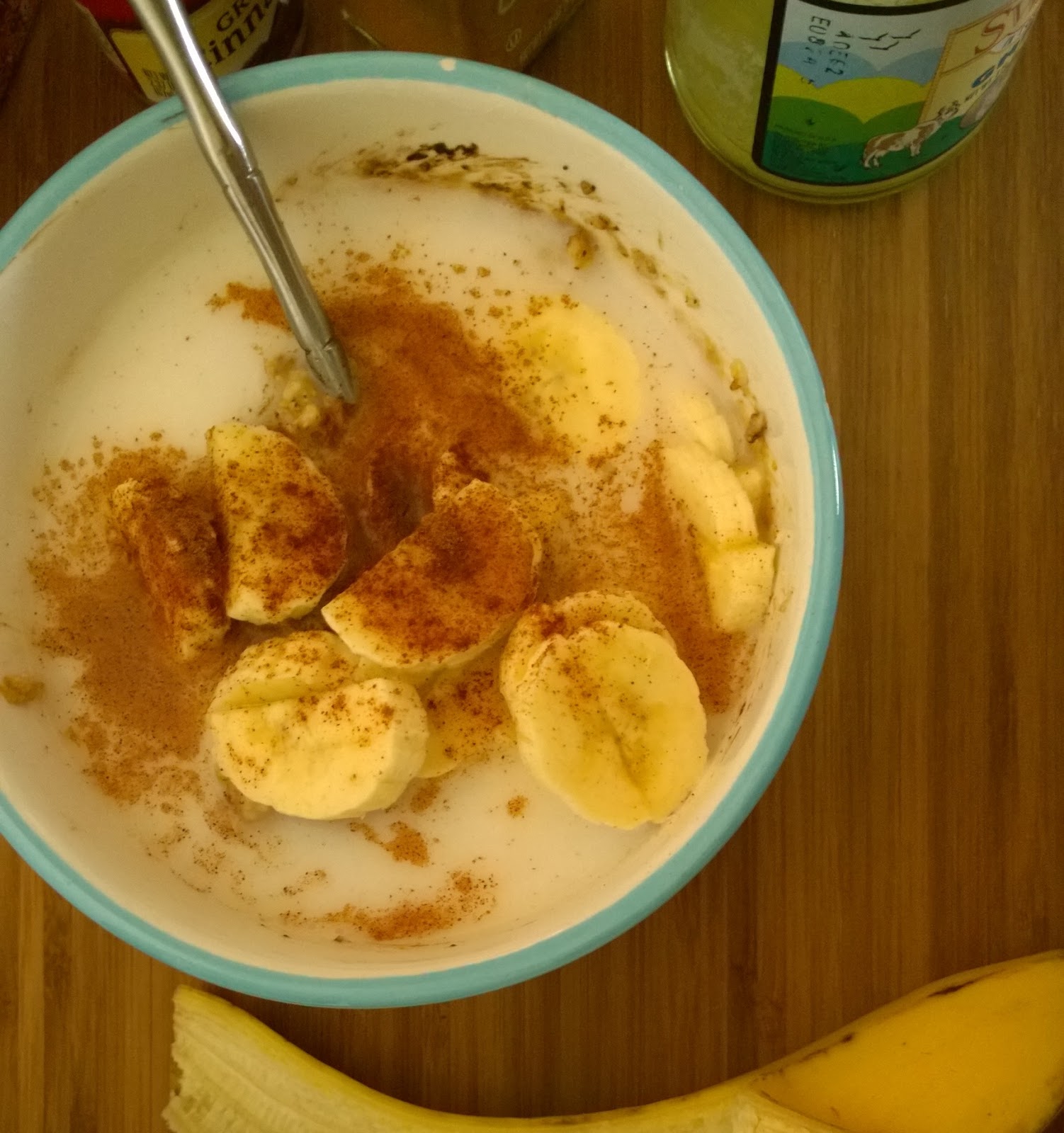
Oatmeal is my favorite breakfast even when traveling 

      2.       Breakfast. If your hotel offers breakfast, it is a great idea to pick the oatmeal or boiled eggs rather than go for the waffle or white bread. Fruit are also often available and provide you with plenty of nutrients in addition to few calories. Starting the day right can help you stay energized throughout the day. One year I was traveling in Europe and most places I stayed in did offer breakfast, though not a very nutritious one. What I did was carry wheat bran and ground flaxseed and I sprinkled this on my cereal or toast.

If free breakfast is not available, there are many ways to make it healthy at a restaurant. Again, oatmeal is a great choice, but other than that, an omelet with plenty of vegetables is a great choice, too. If you must have something sweet, have one pancake or piece of French toast for dessert, rather than as the main item. And by the way, Jamba Juice offers oatmeal and tasty yogurt and granola cups, making it a good breakfast place option. Bagels are another good choice if they’re made with whole grains and filled/eaten with vegetables and lean protein.

Such good cauliflower they have in Bulgaria! 
3.       Lunch and dinner. It is very tempting to think that while on vacation, you are justified to eat whatever peaks your fancy. Trust me, this happens to me all the time. I believe that you can do this some of the time, but your body and your gut will thank you if you put a little bit more thought into meal/restaurant choices. In my experience, vegetables are not usually the main players at restaurants, except for salads and perhaps appetizers. If this is so, it is a good idea to choose that side salad or appetizer. In Carlsbad, CA, I had a slice of pizza for example, but for an appetizer I picked curried cauliflower with aioli. It was delicious and I really didn’t even want the pizza afterwards, as it was satisfying enough on its own.

4.       Snacks. Hunger tends to surprise me more than I like to think. That is why I always carry a ton of food with me, not just during trips. My staples are nuts and dried fruit, and perhaps a raw granola bar as well. As mentioned above, bananas, cuties and carrots are great snacks, which I often take with me to school. It really pays to plan ahead as it is not fun at all to be unable to enjoy a cool place fully because you are dying of hunger and no food is available! This has also happened to me multiple times.

5.       Drinks. Don’t forget to drink plenty of water. It gets tricky when you don’t know the next time that you’ll have access to a rest room, but it is important to stay hydrated. Especially if your meals haven’t been the most fiber-rich, dehydration can cause unpleasant gastrointestinal problems, if you know what I mean. Water is my go-to drink and I rarely drink sweetened beverages. Keep a bottle of water with you at all times.

Yes, I had this in LA along with а veggie burger... But the next
day I went to Veggie Grill and had а salad 
6.       Strike a balance. In a new place, you definitely want to try all the cool new dishes you won’t have a chance to try anywhere else. Just know that traditional dishes may not always be just meat, cheese or refined grains, many cultures have awesome vegetarian and vegetable-rich dishes, too. In Bulgaria, this is very true: they have many delicious salads and dishes like zucchini in a garlic sauce, or filled bell peppers. In addition, in Budapest, I found an excellent vegetarian restaurant – Napfenyes Etterem (http://www.napfenyesetterem.hu/) that offered traditional Hungarian dishes (I loved their stuffed cabbage). The portion was U.S. style, meaning enormous, but it was very nutritious.

7.       This brings me to another subject: what to do when the dishes are very big? During a trip, it might not be possible to take what you can’t finish with you, as you might not have a fridge to keep it in, or you don’t want to carry it around during sightseeing. I wouldn’t recommend finishing huge portions, as overeating can lead to unnecessary weight gain and notable discomfort (been there). I recommend either splitting the dishes with whoever is traveling with you, or if not possible, just leaving it. I’m very much against food waste, but at times like these it can be necessary. Also, even though upon ordering you might feel like eating a horse, it is a good idea to start small and order more if still hungry.

Enormous, but nutritious
I love to travel, but I often dread what happens to my eating. I’ve been able to improve using these tips above and I hope you can, too! No more weight gain during trips (and remember, staying active also helps)!

Thanks for reading till the end, this was a long one. Go ahead, you deserve a snack now - you know how to do that well now too!

Till next time,


Anna-Kaisa

Friday, October 2, 2015

Curcumin – a universal cure?

For some time now I’ve heard great things about curcumin, the substance found in turmeric. It’s cancer prevention abilities were even mentioned during one of my classes. Intrigued, I decided to do some research and see what else curcumin is good for.

Sure enough I found an article that looked at about 300 scientific studies focused on curcumin. What they found was amazing: not only does curcumin help treat a variety of illnesses, but also its curative effects come with no side effects. Curcumin does this mostly by reducing inflammation and through antioxidant effect.

The diseases that were positively affected by curcumin included atherosclerosis, diabetes, cancer, asthma, and hepatic, pancreatic, gastric and intestinal diseases. Even though most of the experiments discussed in the article were conducted on animals, the results are promising, especially since the scientists noticed no side effects even with big doses – something that is difficult to achieve with conventional medicine.¹

To look outside of modern science, the ancient wisdom of Ayurveda has also utilized curcumin infused turmeric for medicinal purposes for thousands of years. Turmeric is part of many herbal mixtures in the treatment of numerous conditions, like rashes, and it is also used as an antibiotic. It can even help heal a sore throat. For the treatment of a sore throat, Ayurveda recommends to mix ½ a teaspoon of turmeric and salt each in a cup of hot water and use it as a gargle in the morning and in the evening. (The water shouldn’t be so hot as to burn your throat.)² I have tried this and it seems to have a soothing effect.

So not necessarily a cure for everything (actually, we don’t know that yet as science takes time), but it's useful in a multitude of ways nevertheless!

In light of the great health benefits of turmeric, adding it into the diet sounds enticing. It is quite easy to do – one can simply drink a mixture of the yellow powder with water, or add it as a spice in every day cooking. It is especially great in Indian style recipes; in fact, it is one of the ingredients of curry powder. This gives you a great reason to enjoy your favorite Indian curry, too!

I hope you have enjoyed my post – feel free to request topics for me to discuss, I would love that!

Love,
Anna-Kaisa


References:

1.       Bengmark, Stig MD, PhD, FRACS (hon), FRCPS (hon). “Curcumin, An Atoxic Antioxidant and Natural NFκB, Cyclooxygenase-2, Lipooxygenase, and Inducible Nitric Oxide Synthase Inhibitor: A Shield Against Acute and Chronic Diseases.” Journal of Parenteral and Enteral Nutrition. JANUARY-FEBRUARY 2006 vol. 30. Pages 45-51. doi10.1177/014860710603000145. Web. April 1 2015.


2.       Lad, Vasant BAMS MASc. The Complete Book of Ayervedic Home Remedies. New York: Harmony Books. 1998. Print.

Wednesday, July 15, 2015

3 Weeks in Bulgaria

The VMV Supermarket chain advertising their
great selection of fresh Bulgarian fruits and vegetables
Having my family in Finland and Bulgaria means that I visit these two countries every summer. This time around I noticed new aspects about Bulgarian cuisine and eating style that may not be so clearly visible for those that don’t know any locals or the language.

Firstly, I was happy to see that many grocery store chains have started using the freshness of their produce as a marketing trick – Lidl (a German chain) even boasts that they are the only store to employ a freshness manager to make sure they carry the freshest fruits and vegetables possible. I would love to see something like this in the U.S.!
  
A different take on Caprese salad with cucumber puree
- delicious!
On a more worrying note, I noticed that people in Bulgaria use a lot of salt. To begin with, food products, especially cheese, tend to echo this trend by being very salty. Salt is also often heavily added to finished dishes both at home and in a restaurant – often without first tasting them. I personally had no need to add salt to any of my meals and on the other hand, when I cooked something, it wasn’t salty enough to others. The problem is that people are so used to eating high amounts of salt that upon trying to reduce it, the food doesn’t taste as good, which makes improvement difficult. Also, as learned during my spring semester at Berkeley, high salt intake tends to increase the craving for salt forming a classic vicious cycle.
  
Self-picked
Observing this high salt intake, I wanted to find out whether it has an effect on Bulgarian national health. Not surprisingly, when it comes to deaths due to hypertension (in which salt is a factor), Bulgaria had the third highest rate in Europe in 2011(1). Even though Bulgarians have also healthy eating habits, such as having salad as an appetizer at lunch and dinner, this doesn’t seem to be enough to counteract the effects of salt. Of course, salt is always added to salad, too. Tomato and cucumber are by far the most popular vegetables and in my opinion, Bulgarians could benefit from adding variety to their raw vegetable intake. However, I’ve seen many people eat very few vegetables and not just in Bulgaria, so having the same or almost the same vegetables every day is better than having no veggies at all.
  
Grandma's cherries
Interestingly, however, most people that have a yard grow their own produce and not just tomatoes and cucumbers: thus, there is a great potential for increasing variety. My husband’s grandmother, for example, grows also strawberries, lettuce, carrots, beans, plums, cherries and corn among others. For pensioners, growing some vegetables doesn’t only provide fresh food, but it also is a good way to reduce food costs as pensions are very small. Some even produce honey for sale to add to their meager monthly incomes. Unfortunately, pesticides are widely used even on these backyard gardens, as according to many gardeners, there wouldn’t be much produce left for consumption without them. I didn’t find out what is used, but I hope that there is not much residue left when it is time to do harvest.

Cauliflower bake
During this year’s trip, I noticed also that foraging is pretty common here, most popular items being plants that can be dried for tea or other ways used for making different kinds of drinks and syrups. Mashterka, for instance, is a tiny purple flower, which turns into a delicious herbal tea! I had the opportunity to pick some, as we came across it on one of our trips to see ancient ruins. By the way, there are plenty of archeological attractions to see here – this country has roots that go deep!
  
I hope you have enjoyed my post. See you next time!


Anna-Kaisa


Sources:


      (1)  Hypertension. World Health Rankings 2011 http://www.worldlifeexpectancy.com/cause-of-death/hypertension/by-country/ 20 June 2015

Monday, May 18, 2015

Why Do We Eat So Badly?

A bar graph that shows percentages of men and women within weight categories
Men   Women
Prevalence of Obesity and 
Overweight in the U.S. 
(adults, estimated %)
Source:NIH
I’ve just finished watching a documentary called “Fed-Up” (now that I finally had the time to do something else other than study) and it definitely was able to stir many emotions in me, even if I already knew of most of
the issues that the documentary presented. It seems crazy how many people are overweight or obese! Yet, when you stop and think about it, it starts to make sense. What it all boils down to is processed food.

The vast majority of the foods we see in the supermarkets are highly processed. Processing itself is not necessarily bad, but unfortunately most of the processing has to do with adding a lot of sugar, salt, fat and artificial ingredients to enhance the food’s shelf life, flavor or texture. Micronutriens, such as vitamins and minerals (except for sodium), are absent, or perhaps added to make the food seem better than it is. Processed food is all around us, it is convenient and tasty – how can you not eat it?

Let’s look at these three contributors to the appeal of processed food. The first, and one of the biggest, hurdles in eating less processed food is convenience. Living in Silicon Valley, it is not hard at all to feel the pull of convenience over health – since I am using most of my time for studying, while also attempting to add some exercise into my routine, cooking is just a very time consuming activity that becomes hard to fit in. Time is difficult to come by and it probably takes some serious prioritizing and reorganizing of one’s life to change that.

Americans get most of their calories from processed food
Secondly, the documentary made a good point, which I have also contemplated and experienced in the past – if the food is there, it is hard to resist, but if it is not there, resisting is obviously a piece of cake. The solution to this might seem simple – just don’t buy any processed/unhealthy foods and fill your cabinets with nuts, fruit and vegetables instead. However, unhealthy and unfortunately very appealing food is all around us; in the grocery store, on TV, on the streets. Sometimes I think there is a McDonald’s every five blocks! It is difficult to keep processed food at a distance when it is shoved in your face all the time.

Cash register temptations
Thirdly, unless you have weaned yourself off of sugar and salt, processed food most of the time tastes pretty good. There is something in our primitive brain that tells us to eat those foods that taste sweet, fatty and satisfying. Luckily, processed food is not the only food that tastes great. And what’s better, the more of healthy stuff you eat, the more you will prefer it over processed food. I have noticed that milk chocolate just doesn’t taste as good as it used to, for example. Eating is also a very emotional activity that keeps us from letting go of some foods – just imagine someone telling you that you can never have your favorite family dish ever again.

So let’s all just stop buying processed food. We’ll simply close our eyes when we drive down the street, make time to cook and buy nothing that is bad for us. That is of course if we can afford to choose. Some people rely on processed food to provide them with enough calories for every day activities, whereas buying processed food for others may mean being able to buy more of something else, like clothing. Furthermore, healthy food is sometimes difficult to have access to – not necessarily because it is more expensive, but because supermarkets selling fresh produce are not close to everyone, not even here in the Bay Area, the mecca of technology and innovation.

So what should we do? Convincing big food companies to ditch the bad stuff and produce healthy food is probably not going to happen any time soon and the government will not be able to shift their subsidies from wheat and sugar to kale and oranges. Part of the answer is education, but no amount of education is going to help if people don’t have the means to do what they are taught. 

What we can do is to look at our own choices. Question them. Why do I buy the products I buy? Are these products good for me? Is there a better option? Could I make some more time each week to cook from scratch? Even small changes matter, as they will eventually lead to big improvements.


Love,


Anna-Kaisa


References
NIH Obesity and Overweight statistics
USDA Food Consumption Statistics

Thursday, January 15, 2015

As per Nicole's suggestion, here is a recipe of vegan brownies that uses coconut oil. I adapted it from http://www.veganbaking.net/recipes/brownies-and-bars/brownies/ultimate-brownies

To make the recipe more healthy, instead of all-purpose flour I used whole wheat flour and instead of vegan butter I used coconut oil. Also, half of the sugar I used was organic coconut palm sugar. I omitted the espresso powder.

The previous time I made these I used coconut butter and there was a slight difference in flavor and texture: coconut oil gives a less strong coconut flavor to the brownies, but makes the consistency softer, which is not necessarily a bad thing. It is a good idea to let the brownies cool completely as it says in the recipe, which will make the consistency firmer. I was too eager and tried them straight from the oven and found the brownies very soft.

I have experimented with making baked goods more healthy and it is often very difficult to do that and maintain the same delicious flavor. With this recipe I was able to use whole wheat flour and coconut sugar without diminishing the deliciousness of the brownies. I acknowledge that it is nice to have something sweet sometimes and I think that this recipe is one that will be as close to a healthy treat as you can get! These brownies contain flax seed with omega-3 and omega-6 fatty acids, whole wheat flour with fiber and B-vitamins, coconut oil with medium chain fatty acids and antioxidants, and cocoa powder with antioxidants and fiber. There is no cholesterol or animal fats. They do contain white sugar, but by using coconut sugar, I was able to decrease it by half. So good!

Thanks, Nicole for the suggestion!

If you have recipes that use coconut oil, please share with us!

Love,

Anna-Kaisa